Unit
The desk at 11:47 PM
The desk at 11:47 PM is a battlefield of intention and distraction. Half of it is buried under sketches—pencil lines bleeding into each other, a face with one eye still missing its iris, a city skyline that refuses to stay straight. The other half holds the detritus of a mind that can’t decide whether to keep working or call it a night: a chipped mug of tea gone cold hours ago, a pair of scissors with one blade stuck open, a tube of paint rolled so tight the cap won’t twist off. The lamp’s glow is the only thing still warm in the room, pooling over the chaos like a spotlight on a stage that hasn’t been set yet.
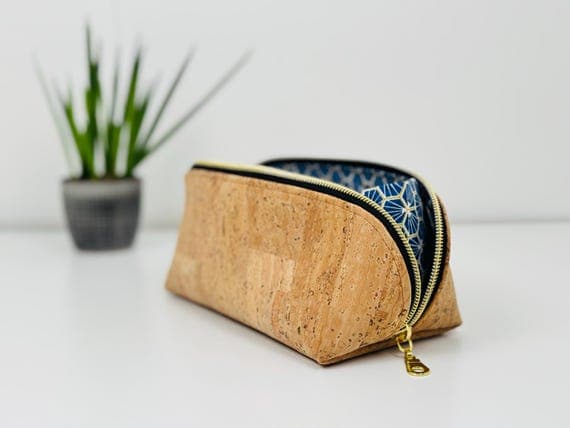
Then the cork case slides into view. Not with a dramatic flourish, but with the quiet authority of something that knows its place. The geometric lining inside catches the light—blue and white, sharp angles against the soft blur of the sketches—and for a second, the desk isn’t just a mess. It’s a collection. The cork’s grain is visible even in the dim light, a subtle texture that asks to be touched. You run a finger along the edge, and the slight resistance of the material reminds you that this isn’t just a container. It’s a boundary. A promise that order can live alongside the chaos, not in spite of it.
The cork case as anchor
That’s the first thing the cork case does: it grounds the space before you’ve even decided to ground yourself. It doesn’t demand attention, but it won’t let you ignore it either. The long zipper, sturdy and deliberate, is the kind of detail that makes you pause—how often do you notice the quality of a zipper? But here, it’s the difference between something that feels temporary and something that feels permanent. Like the difference between scribbling on a napkin and inking a sketch on good paper. The cork itself is Portuguese, harvested from trees that regrow after being stripped, a material that carries the weight of its own history without ever making a show of it. The blue cotton lining inside is the opposite—bright, almost playful, a geometric pattern that feels like a secret only you and the case share. It’s the kind of thing you open not because you need to, but because you want to. Because the small act of it—zipping it open, arranging the pens just so, closing it again—is a moment of control in a day that might have felt otherwise.
By midnight, the sketches are still half-finished, but the tea has been poured down the sink and the scissors are closed. The cork case sits closed on the desk, its job done for now. It’s not a storage solution. It’s a threshold.
A week later, the desk looks different. Not because the clutter is gone—it never will be—but because the cork case has become part of the landscape. It’s the first thing you reach for in the morning when you’re still half-asleep, pulling out a pen to jot down an idea before it slips away. It’s the last thing you touch at night, zipping it shut like a period at the end of a sentence. It doesn’t solve the problem of the desk being messy. It solves the problem of the desk feeling like a place where work happens by accident, instead of by design.
The decanter as ritual
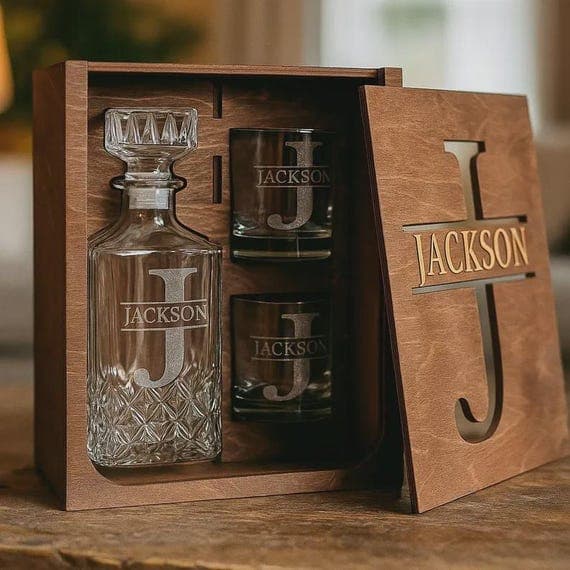
That’s when the decanter set arrives. Not in a box with bubble wrap and instructions, but in a wooden crate that smells like oak and old paper. The glass is heavier than you expected, the engraving catching the light in a way that makes you want to tilt it just to see how the shadows move. The wood box is optional, the listing says, but you keep it anyway. Not because you need it, but because the idea of it appeals to you—the way a deliberate pause can be both functional and indulgent. You pour a finger of whiskey into a glass that’s still warm from being held, and the first sip is a moment of transition. Not a reward for finishing something, but an invitation to begin again.
The decanter set isn’t here to organize your desk. It’s here to organize your mind. The engraved surface isn’t just decoration; it’s a tactile reminder that this pause—this deliberate stillness—is part of the process. The wood box, when you open it, feels like unlocking something. The clink of the glass against the wood is a sound you’ll start to anticipate, like the way a kettle whistles when the water’s ready. It’s the kind of object that makes you ask: What else in my space could be a moment of transition instead of just a tool?
The cork case and the decanter set don’t belong together in the way that matching furniture sets do. They don’t share a color scheme or a material. But they do share a purpose: to turn the functional into the intentional. The cork case is the anchor, the thing that reminds you that even in the middle of chaos, there can be order. The decanter set is the catalyst, the thing that turns a simple drink into a deliberate transition—from the end of one session to the beginning of the next.
Function becomes intention
There’s a tendency to think of creative spaces as places that need to be pristine, as if the absence of clutter is the same as the presence of inspiration. But the best creative spaces aren’t sterile. They’re alive. They’re the kind of places where a cork case can sit next to a half-empty tea mug and a decanter set can live alongside a stack of unfinished sketches, because each object has a role beyond its function. The cork case holds your tools, but it also holds your focus. The decanter set holds your drink, but it also holds your transition.
It’s not about buying things that look like they belong in a museum. It’s about buying things that feel like they were made for the way you work. The cork case doesn’t care if your sketches are good or bad. It just cares that you keep making them. The decanter set doesn’t care if you finish the painting tonight or next week. It just cares that you take the pause.
Choosing to create
By the time the decanter is empty and the cork case is closed, the desk doesn’t look any different than it did at 11:47 PM that first night. But the difference is in the air. The next morning, when you sit down to work, the desk isn’t just a place where you happen to create. It’s a place where you choose to create. And that’s the quiet power of the objects we keep close—not because they’re beautiful, though they are, but because they’re alive in the way only objects that have been held, used, and loved can be.
A closer look
Questions about the products
Why does the cork case’s geometric lining matter to the narrative of intentional living?
The geometric lining inside the cork case serves as a visual anchor in the cluttered desk scene, transforming the object from a mere container into a deliberate design element that contrasts with the organic chaos of the sketches. Its sharp angles and bright blue-and-white pattern create a moment of clarity, reinforcing the idea that order and creativity can coexist without erasing each other.
How does the whiskey decanter set act as more than just a functional object in the story?
The decanter set is framed as a catalyst for transition, turning a simple drink into a ritual that marks the boundary between creative sessions. Its engraved glass and optional wood box elevate it from a tool to a tactile reminder of intentional pauses, emphasizing how objects can shape mindset and workflow beyond their primary use.
What does the article suggest about the relationship between craftsmanship and creative ritual?
The article argues that craftsmanship—embodied in the cork case’s Portuguese cork and the decanter set’s engraved glass—adds a layer of intentionality to objects, making them feel alive and purposeful in a creative space. The tactile qualities (e.g., the zipper’s resistance, the glass’s weight) invite interaction, turning routine actions into small acts of care that nurture the creative process.