Unit
UnitBy seven in the morning, the
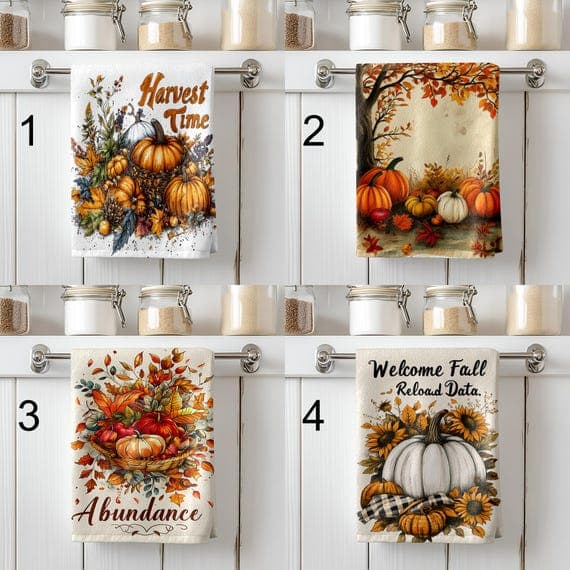
By seven in the morning, the kitchen floor is already cold under bare feet. The only warmth comes from the oven light, still glowing after last night’s batch of cinnamon rolls, and the damp weight of a towel draped over the handle. It’s pumpkin print—thick cotton with a raised texture where the leaves catch the light. You press your palm against it and feel the cool moisture seep into your skin. This is the first tactile moment of the day: the towel’s weight, the way it clings before it gives way, the faint scent of flour still clinging to the fibers. It’s not just a towel. It’s the quietest invitation to slow down.
The pumpkin print isn’t random. It’s a seasonal anchor, a visual cue that the kitchen isn’t just a workspace but a stage for small rituals. When the light hits it just right, the leaves seem to lift off the fabric, as if the towel itself is holding the memory of autumn. You use it to wipe flour from the mixing bowl, to blot the rim of a just-poured mug, to catch the drips from a rinsed spoon. Each touch is a reminder: cooking isn’t just about the meal. It’s about the moments between the steps—the flour dust settling, the steam rising, the towel’s dampness fading into dryness.
This is where mindful cooking begins—not with a recipe, but with a towel.
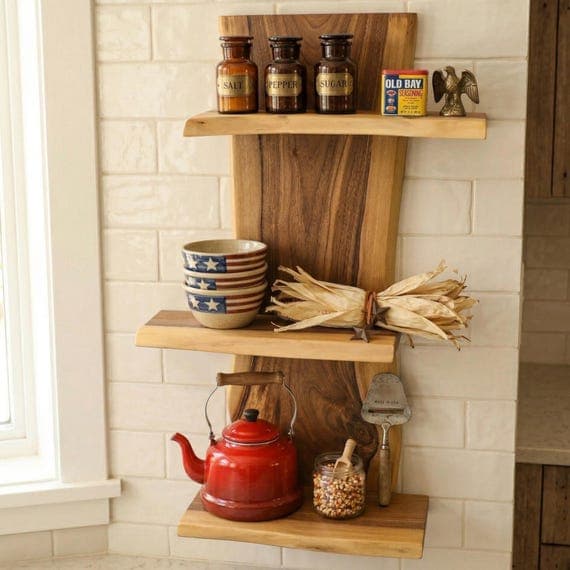
The shelf arrives later, after the first batch of cookies is cooling on the rack and the counter is cluttered with measuring spoons and half-empty spice jars. It’s a walnut plank, live edge on one side where the grain curls like a wave. The installer leaves it slightly uneven, the back edge catching the light at an angle that makes the wood’s natural variations feel intentional. You run your fingertips along the underside and feel the slight give of the hidden bracket, the way the shelf seems to float just above the wall. It’s not just storage. It’s a functional stage.
You place the spice jars first—cinnamon
You place the spice jars first—cinnamon, nutmeg, smoked paprika—arranged by color, darkest to lightest, so the labels face forward without crowding. Then the small ceramic dish that holds the wooden spoons, their handles worn smooth from years of stirring. The shelf becomes a living display, a place where utility meets intention. When you reach for the cinnamon, your fingers brush the walnut grain, the slight roughness where the live edge was sanded but not smoothed away. It’s a texture you notice only when you’re not in a hurry.
The shelf’s presence changes the rhythm of the kitchen. It turns the act of retrieving a spice from a chore into a deliberate pause. You linger. You notice the way the light catches the amber glass of the nutmeg jar. You remember the last time you used it, in a pumpkin bread that smelled like the towel still does.
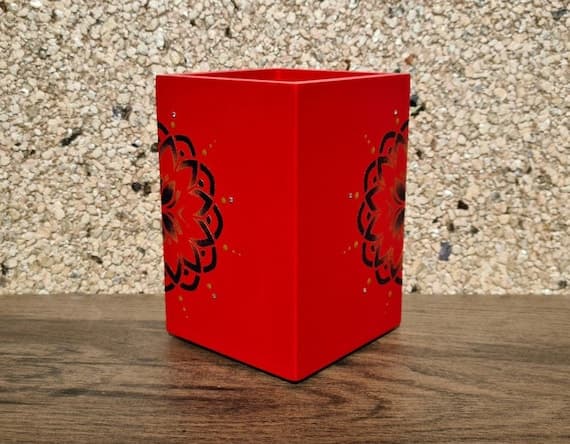
The pencil pot sits on the windowsill, next to the cutting board where the carrots are still waiting to be peeled. It’s raspberry pink poplar, the wood so light it’s almost white, with navy and gold mandalas carved into the sides. The Swarovski crystals embedded in the dots catch the light every time you move, tiny glints that feel like a secret. You open the lid and the scent of cedar rises—cedar from the pencil shavings, cedar from the wood itself. It’s a scent that lingers, a quiet reminder that this space is for more than just cooking.
You use it to hold the pens you jot notes on, the recipe cards you’ve scribbled on, the small sketchbook where you’ve doodled the shape of a new loaf pan. The pencil pot becomes a vessel for creative pauses. When you’re waiting for the water to boil, you flip through the sketchbook, tracing the lines of a half-formed idea. The crystals catch the light again, and for a moment, the kitchen feels like a studio.
The pencil pot’s presence is subtle but unmistakable. It turns the act of writing a grocery list into something tactile, the wood smooth under your palm, the crystals a small reward for the pause. It’s not about the tools inside. It’s about the way they ask for your attention.
The rug arrives last, after the
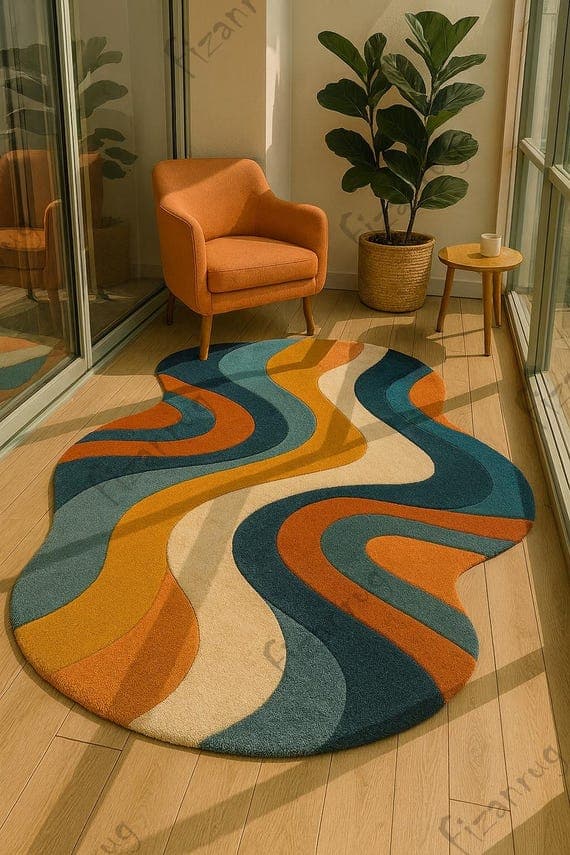
The rug arrives last, after the cookies are packed away and the kitchen is quiet except for the hum of the fridge. It’s a hand-tufted abstract, waves of deep blues and warm ochres that seem to move under your feet. The texture is uneven—some tufts are tighter, others looser—so your soles press into it differently with each step. It’s not just a rug. It’s a foundation.
You stand at the sink, washing the last bowl, and feel the rug’s give under your weight. The tufts press back, a gentle resistance that makes the floor feel alive. The rug’s irregular shape means it doesn’t quite fit the space, leaving a sliver of hardwood exposed near the stove. That gap is intentional. It’s a reminder that the kitchen isn’t a showroom. It’s a lived-in space where cooking happens daily, where imperfections are part of the charm.
The rug’s presence changes the way you move. You no longer rush to the sink, eager to finish. Instead, you linger, the rug’s texture grounding you. The waves of color seem to shift as the light changes, a subtle reminder that the kitchen is a place of constant small transformations.
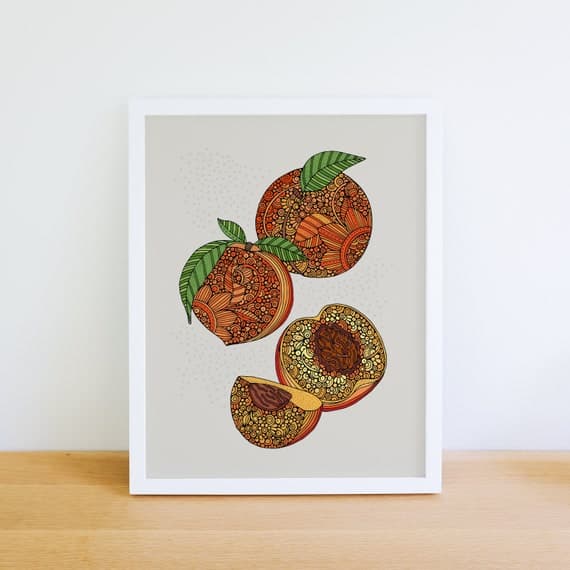
The print is the last addition, slipped into a simple black frame and hung above the shelf. It’s a pen-and-ink drawing of peaches, the lines so precise they feel like a sketch from another era. The colors are muted—soft golds and dusty greens—so it doesn’t compete with the kitchen’s warmth. It’s not a statement piece. It’s a framed reminder.
You glance at it while stirring
You glance at it while stirring the pot of soup, the spoon’s clink against the pot a counterpoint to the print’s quiet lines. The peaches seem to glow in the low light, their shapes familiar yet abstract. It’s a small thing, but it changes the mood. The kitchen is no longer just a workspace. It’s a place where art and cooking intertwine.
The towel, the shelf, the pencil pot, the rug, the print—five objects, each chosen for a reason. The towel grounds the day in tactile mindfulness. The shelf turns storage into display. The pencil pot holds the tools of creative pauses. The rug grounds the space with texture. The print frames the kitchen as a place of art.
Together, they show how mindful cooking isn’t about perfection. It’s about noticing the quiet moments between chopping and tasting. It’s about the way a damp towel feels in your hand, the way a walnut shelf’s grain catches the light, the way a pencil pot’s crystals glint when you’re not expecting it. It’s about the way a rug’s texture slows your steps, the way a print’s lines make you pause.
The kitchen isn’t a sanctuary because it’s pristine. It’s a sanctuary because it’s shaped by small, intentional choices. The towel is still damp. The shelf still holds the spice jars. The pencil pot still smells of cedar. The rug still presses back under your feet. The print still glows in the low light.
And the cooking
And the cooking? It’s still happening. But now, it feels like something more.
A closer look
Questions about the products
Why does the pumpkin towel serve as more than just a kitchen towel in the story?
The towel is positioned as the first tactile anchor of the day, its damp weight and seasonal print transforming a routine object into a mindful ritual. Its texture and scent become a reminder to slow down, making the towel a narrative device that grounds the entire story in sensory mindfulness.
How does the walnut shelf change the rhythm of cooking beyond its functional use?
The shelf isn’t just storage—it becomes a ‘functional stage’ where spices and tools are arranged with intention, turning retrieval into a deliberate pause. The live edge’s texture and the slight unevenness of its installation make it a physical reminder to linger, not rush, in the kitchen.
What role do the Swarovski crystals in the pencil pot play in the narrative?
The crystals act as subtle, unexpected moments of beauty that interrupt the flow of cooking, drawing attention to the act of pausing. Their glints serve as a visual metaphor for the small, intentional interruptions that make cooking mindful rather than mechanical.